
Year A—January 6, 2026
Readings:
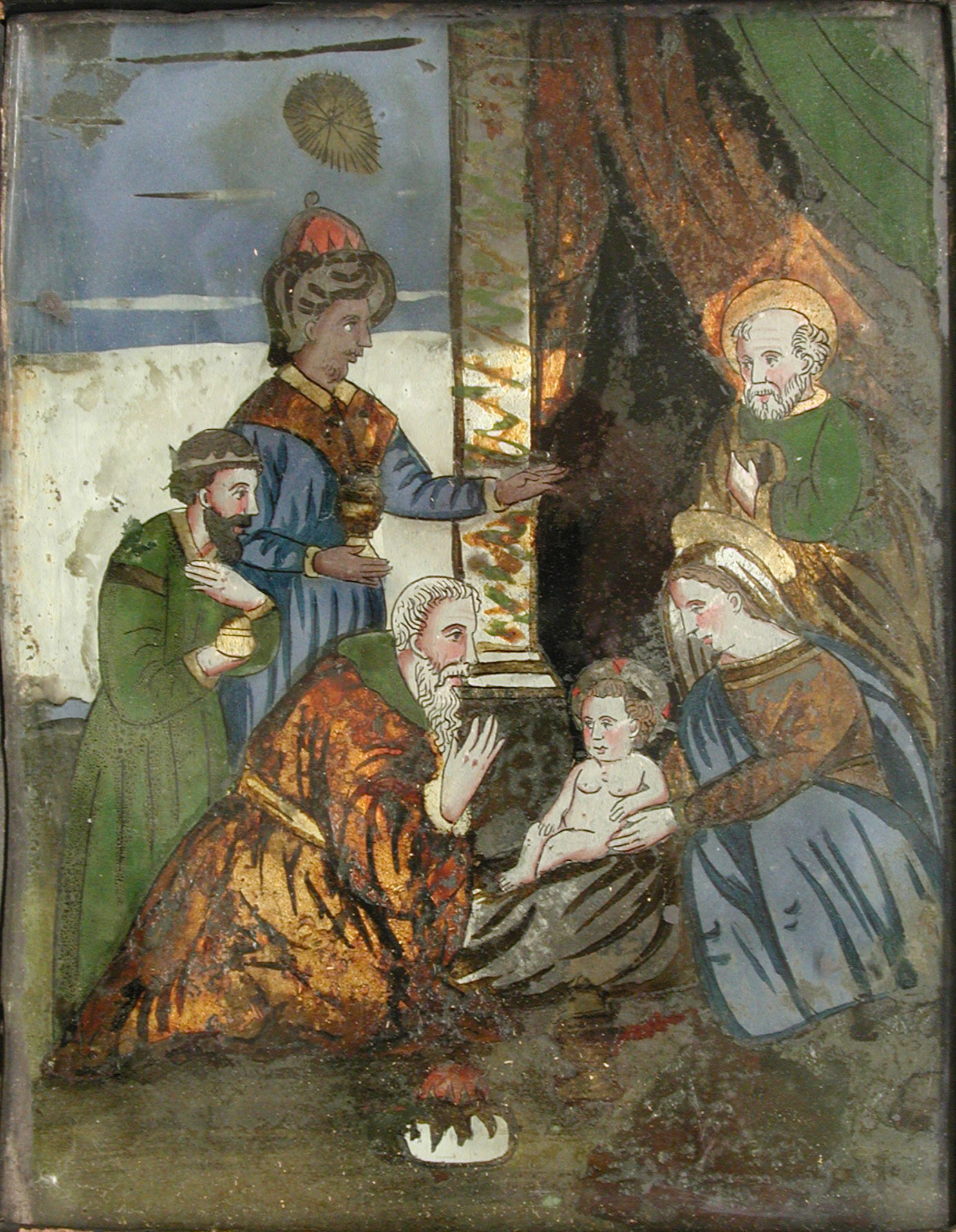
The image above is a very small piece housed at the Met. It’s a mere 5.75 x 4.5 inches (14.6×11.4 cm), though the frame it’s in probably almost doubles the size.
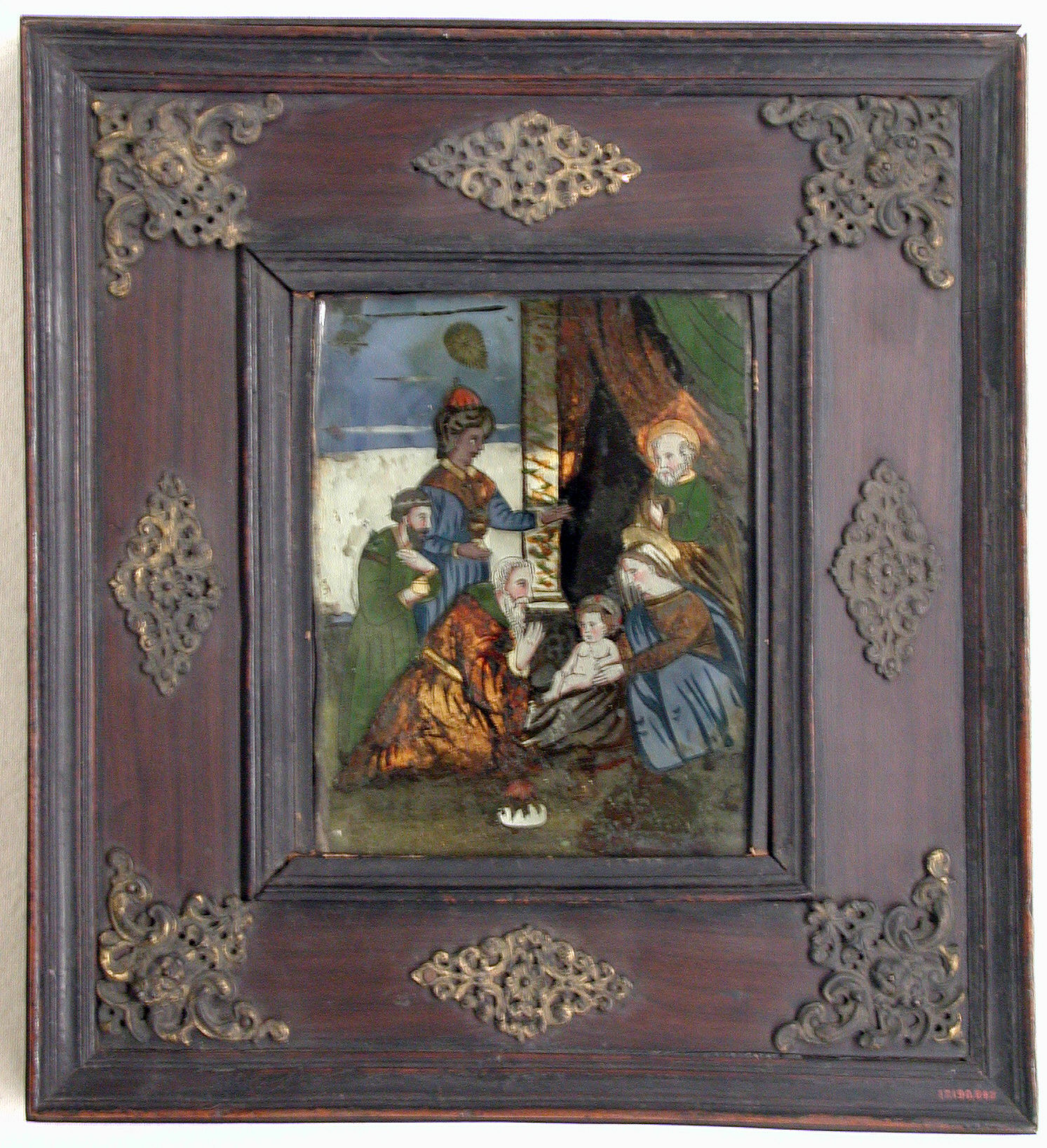
That small size seems appropriate: Like the magus shown on his knees adoring the Christ child, we must lean in, make ourselves smaller, get close to the image to make out the details. The technique, verre églomiseé, or “gilded glass,” involves applying gold leaf to the back of a piece of glass, then painting the image in reverse: the details first, then the background colors. I’m not a painter, so I can only imagine how tricky that mst be. Disorienting, even.
Which also seems appropriate. The story on which the Epiphany centers is an odd one. The author—we’ll call him “Matthew”— uses it to tell us that Jesus is the catalyst for Isaiah’s image of the camels of Midian, Ephah, and Sheba carrying in to the Holy Land people who seek to worship God with gifts of gold and frankincense.
It’s impossible to know what kernel of historicity might be in back of this story. The painting above appears to have suffered some deterioration, maybe some paint and/or gold leaf has been worn or scraped off. But the important details remain! Even the red cross in Christ’s halo is visible, confirming—just in case we couldn’t tell from context—that, yes, this is that baby, this is God in the flesh (well, an artist’s impression, anyway). Which is good—the star, dimly visable above the head of the tall magus, seems to be in flight, no longer needed, its gold foil dimmed by age or perhaps by paint, or…just maybe by the brighter light of God Incarnate.
The story similarly lacks the kind of detail modern people want to find in it. Like, how would these magi know that they had found the right child, without the aid of artistic conventions like halos? Whatever we want to know about the logistics to satisfy our need to categorize this story as fact or fiction, Matthew doesn’t seem to think we need it. For many modern folks, Christian or not, stories in the Bible are supposed to convey information, to tell us what actually happened, and we tend to think about our religious traditions in the very modern binaries of true/false, real/imaginary, fact/deception. If the baby Jesus really wasn’t visited by curious astrologers from the East, then why are we bothering with this story?
It may well be that everything Matthew tells us is historical fact. It’s doubtful; and both his account and Luke’s can’t both be true. But that doesn’t matter. Those are the wrong details to get hung up on. We’re here to meet Jesus, this unusual little baby far-distant astrologers could read in their star charts (as interpreted by consulting Scripture). Find yourself wondering what Mary and Joseph thought of these strangers showing up and offering them such useless wealth? Use your imagination and see where that carries your heart.
While the painting above may have lost its luster (apart from the brutally white skin on the central figures—Mary, have you no clothes for that baby?!?) the story still offers a shimmering glory beyond whatever any gold can muster.
But the glory of God is also quite unlike gold. It’s small, and dark, and hidden, like a gold-leaf star behind a 500-year-old plate of glass, or like a little baby just being a little baby somewhere in Bethlehem.
 The Sound
Leave a comment