
The Second Sunday in Lent—March 1, 2026
- Genesis 12:1-4a
- Romans 4:1-5, 13-17
- John 3:1-17
- Psalm 121
Note: Scripture quoted in this blog is from the NRSV (New Revised Standard Version) except the Psalms, which are taken from the 1979 BCP (Book of Common Prayer) Psalter.
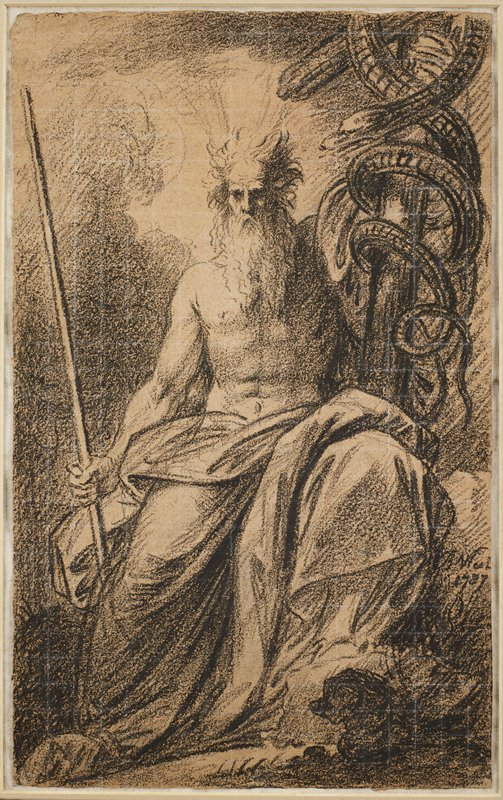
Today’s readings point us back to Israel’s history, hopefully reminding us that Christianity descends from Israelite faith, but also requires a reinterpretation of that tradition for Gentile believers in Jesus. But these readings can remind us of a feature of that tradition we seem to have forgottn: that God’s blessing and God’s salvation are gifts—gifts God wants to share with the whole world.
If we start with the Psalm, we can wrap ourselves in its comforting message that God who watches over us never sleeps:
The Lord shall preserve you from all evil;
it is he who shall keep you safe.
This Psalm is one option for use in the service of Compline, perhaps because it reminds us we are safe, and in that safety, we can go ahead and risk sleep (a vulnerable state to be in).
Instead of sleeping though, let’s use this comfortable safety as a place from which to read our other Scripture passages.
Jesus’ night-time encounter with Nicodemus features the famous John 3:16, a highly familiar verse flanked by verses that are probably only slightly less well-known:
And just as Moses lifted up the serpent in the wilderness, so must the Son of Man be lifted up, that whoever believes in him may have eternal life. For God so loved the world that he gave his only Son, so that everyone who believes in him may not perish but may have eternal life. Indeed, God did not send the Son into the world to condemn the world, but in order that the world might be saved through him.”
Since the lectionary opts for a different passage from the Hebrew Scriptures, let’s take a moment to recall Jesus’ reference to Moses and the serpent. The story is recorded in Numbers 21:4-9:
From Mount Hor they set out by the way to the Red Sea, to go around the land of Edom; but the people became impatient on the way. The people spoke against God and against Moses, “Why have you brought us up out of Egypt to die in the wilderness? For there is no food and no water, and we detest this miserable food.” Then the Lord sent poisonous serpents among the people, and they bit the people, so that many Israelites died. The people came to Moses and said, “We have sinned by speaking against the Lord and against you; pray to the Lord to take away the serpents from us.” So Moses prayed for the people. And the Lord said to Moses, “Make a poisonous serpent, and set it on a pole; and everyone who is bitten shall look at it and live.” So Moses made a serpent of bronze, and put it upon a pole; and whenever a serpent bit someone, that person would look at the serpent of bronze and live.
Because Jesus references this story, Christians often see it as a foreshadowing of Jesus’ crucifixion. The author of the Gospel according to John does seem to be making that connection; but here, as in Numbers, the emphasis is on the act of looking. Moses set the bronze snake up on a pole so that people could look at it, per God’s instruction. In the act of looking, people who had been bitten would reinforce faith in God who responded with healing. Certainly God could have simply healed everyone and protected them from being bitten again. But giving them some agency, the dignity of that interaction with God could bring healing to body and soul. The act of looking requires intention and attention, which open up possibilities for self-understanding and habit-taking. But the simplicity of this act of looking is a reminder that healing is a gift from God. Looking at a bronze serpent doesn’t earn healing; it is more like looking to the hills from where our help comes (Ps. 121:1).
The parallels to Jesus should be fairly easy to make. The healing he offers is also freely given, though it requires us to look to him. As we do that, we begin to form habits. Looking to Jesus as the source of our help, our healing, and our salvation is an act of worship that orients us toward him, and that changes everything.
In his letter to the Roman church, Paul references today’s passage from the Hebrew Scriptures. The theme continues to be faith—faith in God, and in God’s freely-given blessing. In Genesis, Abraham (still Abram at this point) discerns a call from God to leave home and set out for…where, exactly? God doesn’t tell him, but promises to lead him there. God does sweeten the deal: God would make Abraham’s name great, and would bless every family on earth through him, somehow. And whoever he encounters will receive from God according to how they treat Abraham. It’s a promise of safety, but it still requires an act of faith: putting one foot (quite literally) in front of the other. Step by step, Abraham would grow in his faith (that is, trust) in God.
Paul commends this example to the Christians he is writing to. Neither they nor Abraham earned God’s blessing: it is a gift, but one that is accepted through faith. For Abraham, that faith took the form of leaving home and setting off on a journey. (That’s a huge leap of faith!) For the Israelites in the wilderness, that faith took the form of directing their attention to a sign God had instituted. We appropriate God’s gifts through acts of faith that take forms particular to each of us and our own calling; but they all begin with directing our attention toward Jesus, who still seeks to draw the whole world to himself. For that, he was willing to live in a way that got him crucified. We learn from Jesus, and develop habits of faith, when we turn our attention to him through his cross: to him from whom our help comes.
Lent is a time to rehearse our faith intentionally, and through bodily practices that orient us toward Jesus. Let’s pay attention.
 The Sound
Leave a comment