
The Fifth Sunday of Easter—May 3, 2026
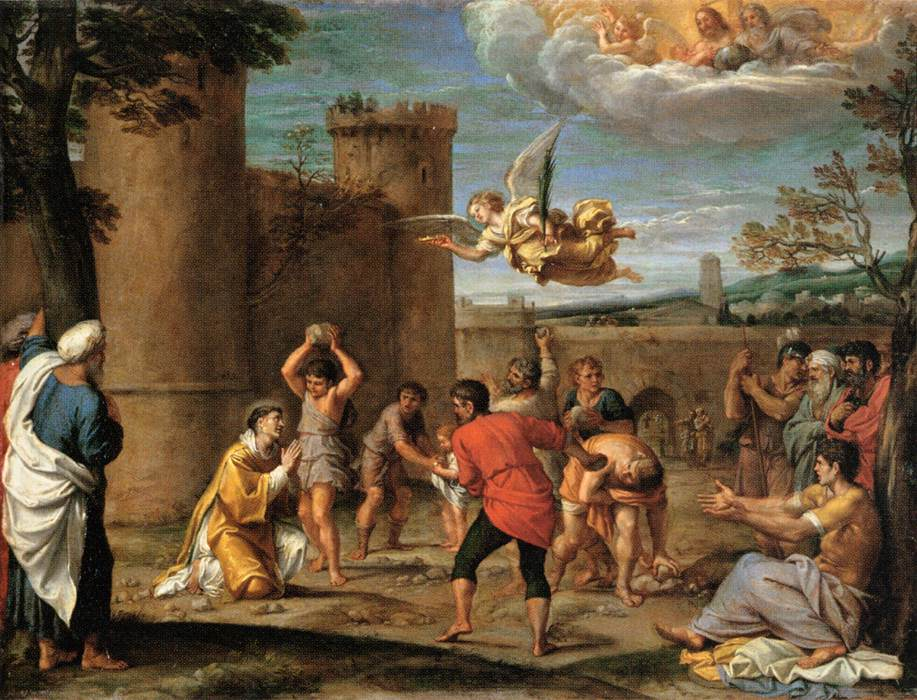
I find it weirdly fitting that the feast of St. Stephen falls the day after Christmas, as if to remind us that the Incarnation of Christ has implications. We are now on the other end of Jesus’ earthly life, and his sojourn to the Cross, through the grave, and into heaven. Stephen, a deacon for about two minutes, gets caught up in an early antisemitic trope some New Testament authors unfortunately lean into: Religious leaders, unable to win debates with Stephen and probably jealous of the converts he was winning, dredged up some blasphemy charges against him. Long story short, they wind up stoning him.
Just before Stephen dies, he claims to see into heaven, where he perceives Jesus seated on God’s right hand.
In the Gospel flashback, we find Jesus spending an evening with his disciples just before he dies. It’s unclear if he was comforting them or disturbing them when he promised they would follow where he was going: did he mean the Cross? or heaven? Both?
Thomas asks for clarity. “We don’t even know where you’re going. How will we know the way there?” [Insert full sermon about discerning where Christ is leading us in our own time so fraught with crosses.]
Jesus’ response is well-known: “I am the way, and the truth, and the life. No one comes to the Father except through me.”
This verse gets trotted out in support of Christian exclusivity all the time. But that is not the context here. Jesus had said he would be going to the Father. That should answer the where Thomas asked about. Now he’s addressing the question of how one gets there.
Think for a minute about all the processes going on inside your body right now. You probably know something about some of them, and don’t even know about even more of them. How your lungs take in air, extract oxygen, and send it off to all the cells in your body, for example. You may know this happens; you may fully understand the biochemistry involved, or you may not. An infant has no idea, and neither does your dog. And yet we’re all breathing, all taking in oxygen, all pumping it through our bodies, and, as a result, staying alive. No one takes in oxygen they need to live except through this process. To state the obvious—that you don’t need to understand how it works in order for it to work—doesn’t change the fact that (all else being equal) anyone who breathes, lives.
Jesus says that anyone who has seen him has seen the Father, making himself a frame or lens for our use. He is in the Father, and the Father is in him. That collapses the destination and the journey, so to speak. If Jesus is going to his Father (and ours), and he is in his Father and his Father is in him, then we who are in him are also—you get the point. The destination will arrive when we abide in the way there. In his ascension, Jesus takes human DNA right into the heart of the Godhead, as it were, just as his birth brought divinity to us.
St. Stephen reminds us of the risk involved in that union. Jesus had told his disciples,
Very truly, I tell you, the one who believes in me will also do the works that I do and, in fact, will do greater works than these, because I am going to the Father.
So Stephen does the works of Jesus: dying, while forgiving the people who are murdering him. In the image above, we see Stephen—who looks to me to be achronistically vested in a deacon’s dalmatic—also wearing a hint of light from heaven, where we see Jesus at God’s right hand. We know where Stephen is going, and we know the way.


Leave a Reply