
(The kids are alright)
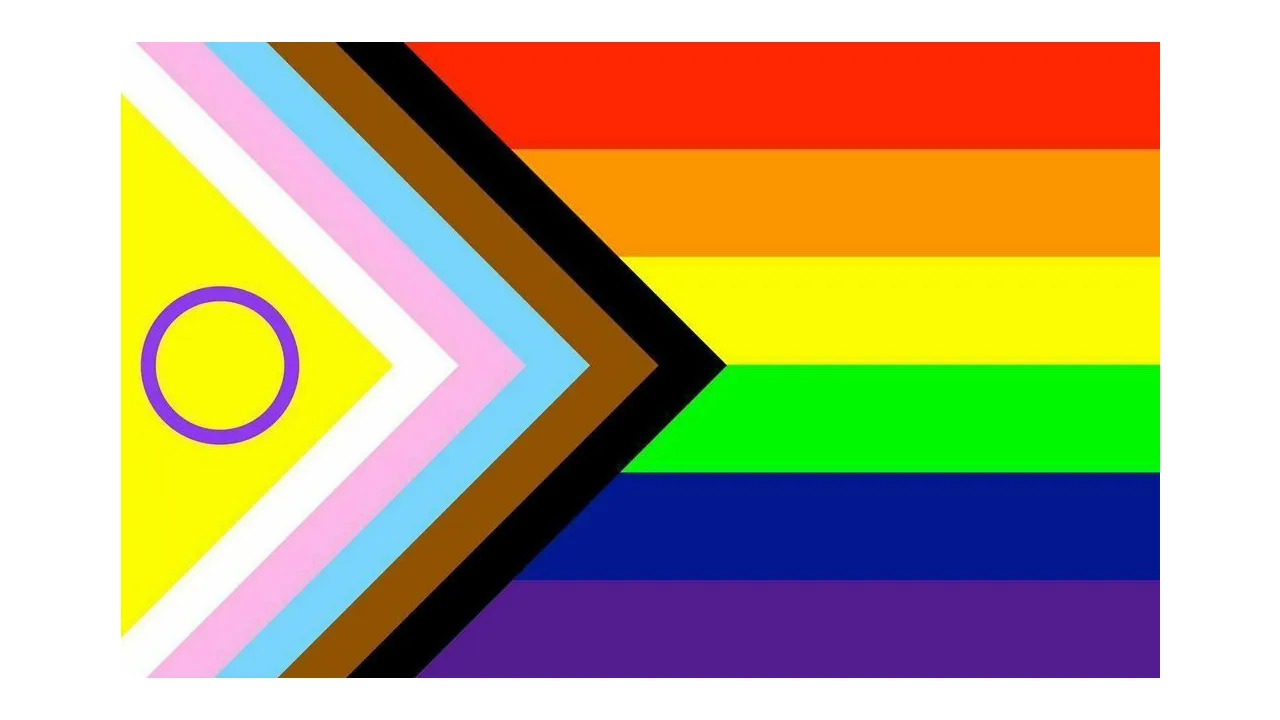
Detroit’s Pride festivities are this weekend, but the whole month celebrates the diversity of the LGBTQIA+ community. And I should note upfront that the subject of this blog post is not my area of expertise, so please fact-check.
I was grading papers this week.
One student, writing on the history and development of the AME (African Methodist Episcopal) Church, commented that despite creating space for Black preachers, the church carried forward the tradition of excluding women from the pulpit, at least early on. While longstanding Christian tradition was likely the main reason for this, I can imagine (but can’t state unequivocally without further research) that the need for respectability could also have played a role.
Progress is often stalled by the need or desire for respectability. The Rev. Dr. Martin Luther King, Jr. wrote unambiguously on this point in his Letter from a Birmingham Jail.
Where am I going with all this?
The word “homosexual,” despite being used in several biblical translations still in use today, was only coined in 1869, and has frequently been associated with claims of identity. What was once (highly inaccurately) called “sodomy” was generally outlawed in Christian countries, and it focused on sexual activity between men. Part of the early activism against such laws was an argument that there was a stable identity involved, not just supposedly-lustful acts.
This was an early strategy toward respectability, something that was desperately needed (and in many contexts, remains so today). Later, the search for a “gay gene” would assume the brunt of this task. If one was “born this way” due to their genetics, or even due to some kind of mechanism like the influence of hormones in utero, then how could we consider homosexuality blameworthy?
Sadly, many churches persisted in doing so, and still do. Others, including my own, believe the Holy Spirit has led us into full acceptance and inclusion of LGBTQIA+ people.
Identities are important. But they are social constructs—yes, including gender and sex. The easiest way to realize this fact is to notice how different cultures, historically and in the present, construct them. Being constructs does not mean that they’re not real. Lots of things, identities and otherwise, are constructs, but can have serious real-world effects; one strong example is money. People live and die because of it, but economies can be, and have been, constructed very differently.
Because identities are constructed, they only partially describe and explain real people. The way we use the term is also ambiguous: We often identify with political parties, sports teams, or religions, and these supposed identities (really affiliations) can easily change, but can just as easily persist, even if your party takes a sharp right turn or your team has a 0-16 season. But I think many people, cis/het and LGBTQIA+ alike, feel their gender and sexual identities run deeper that any of that.
Identity is also sometimes conflated with traits. For example, I am white; but to identify as white seems suspicious. Would that mean I accept and endorse the way “white” has been constructed in our social order? If it’s an identity, it would seem to. And I hope I am not white in that way; but I recognize how powerfully the social order works to instill that would-be identity into me and my self-understanding. Similarly, I am bipolar; but that is not an identity for me; it’s a disease. This is important because I need medication that identifying too closely with my mental illness could easily keep me from taking.
I’m also a poet and a theologian, but I could be otherwise; however, as vocations, those feel a bit more like identities than not. It shouldn’t be surprising that we would identify with what we consider to be our life’s calling in a way we might not identify with a job or career that is, however important, merely a job or career—somethign instrumental.
And here’s what I’m happy to see among younger generations: They are less interested in fixed and stable identities, and more welcoming of experimentation and fluidity. The multiplication of identities represented in the Progress/Pride flag may seem tiring, overwhelming, silly, or [insert your dismissive adjective here]. But it tells us a few really important things.
First, human diversity is basically endless. We can conceive of individual humans as the middle space of a Venn diagram of all their identities, but that’s inaccurate. Humans don’t tend to have such reified constellations of identities unless their social order forces them to.
Second, we are all—if we’re honest—always learning more about ourselves, our world, and the way we relate to that world. How we identify may change, or seem to change, as we continuously get to know ourselves better in the context of our social order. So someone might identify as asexual, but then realize they’re actually gay or trans. This is less a change in identity, I think, than a deeper understanding of oneself, evidenced by the fact that it tends to be experienced as liberating.
“The kids are alright” because they are allowing themselves and others the freedom to explore and revise their claimed identities, without using that change as “evidence” that the wide range of LGBTQIA+ identities are false. This is inherently inclusive and affirming. No one needs to be a gate-keeper of others’ identities.
I have long thought of myself (since college, basically) as asexual and androgenous, although the latter term might be better classifed as agender or non-binary (however, I’m comfortable with she/her pronouns). As such, I’ve never had a coming-out moment, exactly; it always felt like there was nothing to come out about. I mentioned this to someone recently, and they invited me to “come in”—to feel a sense of belonging in LGBTQIA+ spaces. That’s still hard for me, I think because I almost never face discrimination for my identities.
The bottom line is that, as a Christian, I read the New Testament as a record of the unfinished process of widening the circle of who is included in God’s family. In Acts, we see a great example of the Apostles learning to take their cues from what they observe God doing out in the world, beyond even the pages of Scripture. Peter’s vision in which God tells him to eat “unclean” animals along with the command, “Do not call unclean what I have made clean,” comes to fruition in the encounter with Gentiles to whom God had already given the Holy Spirit before the Apostles had figures out that, yes, they could be Christians, even if they hadn’t converted to Judaism first.
“Do not call unclean what I have made clean.” Do we hear this command today? Can we see God at work in the world around us—even in and through the “kids these days”—as moving us into a space of ever widening inclusion and affirmation?


Leave a Reply